Most people who look at vacant land for the first time assume they need a bank. They picture the same process as buying a house: credit check, income verification, 20% down, 30 years of monthly payments to a lender they will never meet. That assumption stops a lot of people from ever moving forward.
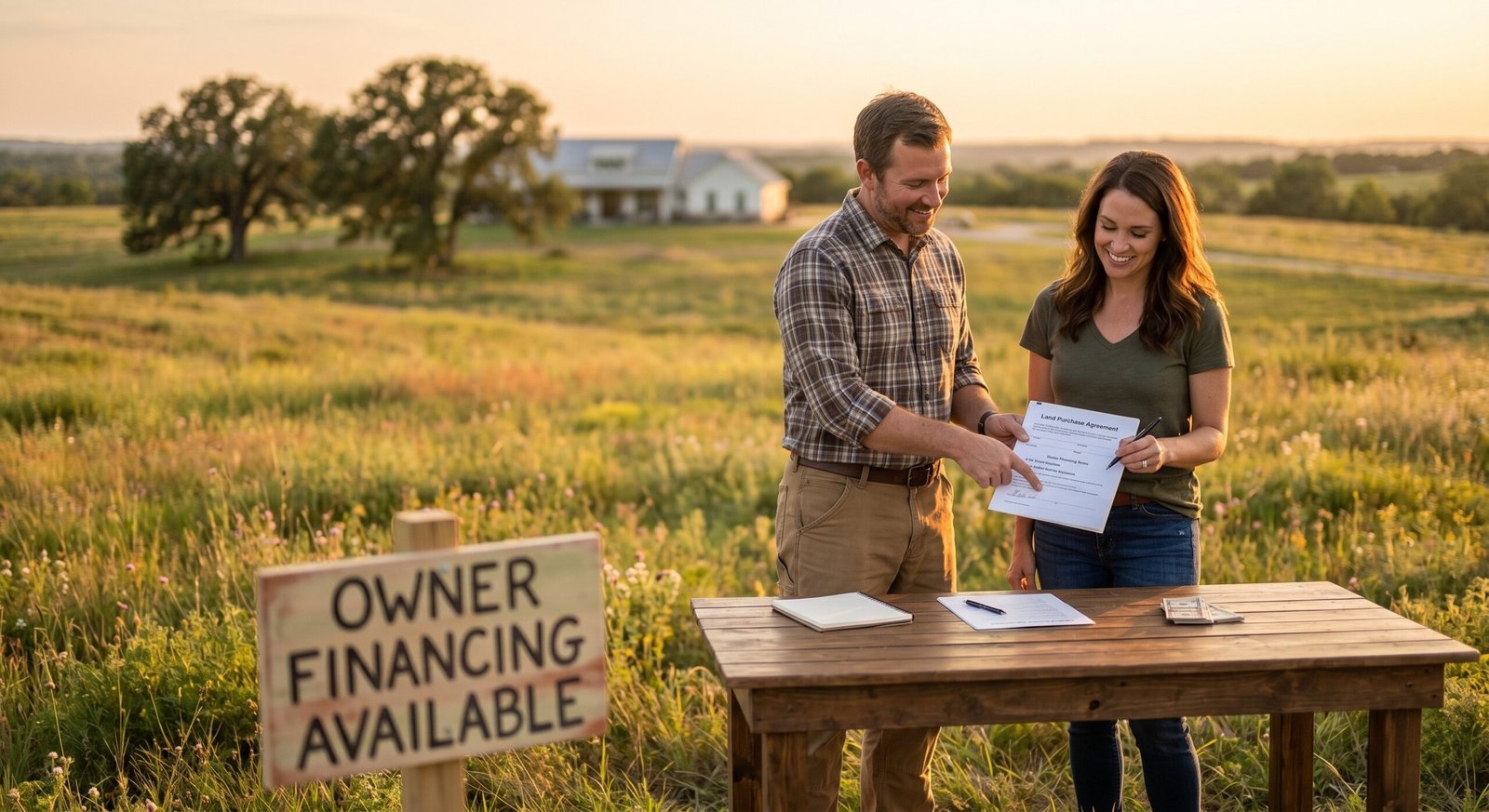
Owner financing works differently. When a land seller offers owner financing, they are acting as the lender. You make your payments directly to them, not to a bank. There is no loan application, no credit pull, and no underwriter reviewing your file. The seller sets the terms, you agree to them, and you sign a contract.
How the process works in practice
You find a property you want. You agree on a price, a down payment, a monthly payment amount, and a term length. You sign a land purchase agreement or installment contract. You pay the down payment and any documentation fee. The seller keeps the deed until you finish paying, or in some cases transfers it to you at the beginning with a lien recorded against it. Once your last payment is made, you own the land outright and the deed is recorded in your name.
The down payment on owner-financed land is usually much smaller than what a bank would require. On lower-priced parcels, you might be looking at $59 to $250 down. On larger properties, it could be a few thousand. The monthly payments are spread over a set term, typically 21 to 78 months depending on the price of the land.
What fees to expect
One thing buyers sometimes overlook is the documentation fee. This is a one-time charge that covers the cost of preparing the contract, doing the title work, and handling the eventual deed preparation and county recording. Any reputable seller will disclose it clearly before you commit.
There is also usually a small monthly note fee added to each payment. This covers the ongoing cost of managing your account. It is typically $7 to $10 per month and should be stated in your contract.
Why it works for buyers
What makes owner financing attractive is the speed and simplicity. You can go from finding a property to having a signed contract within a few days. There are no bank delays, no appraisal requirements, and no closing costs layered on top. For buyers with limited credit history, past financial setbacks, or simply no interest in dealing with banks, it is a practical path to land ownership.
What happens if you miss a payment
Your contract will include default provisions, and persistent non-payment can result in forfeiture of the property. The land seller is not a bank and does not have a collections department. If something comes up, the right move is to call them before you miss a payment, not after. A good seller will work with you.
Owner financing is not a loophole or a last resort. It is a legitimate and increasingly common way to buy land in the United States, particularly rural and vacant parcels where traditional bank financing is limited anyway. Banks are not enthusiastic about lending on raw land. Owner financing fills that gap.