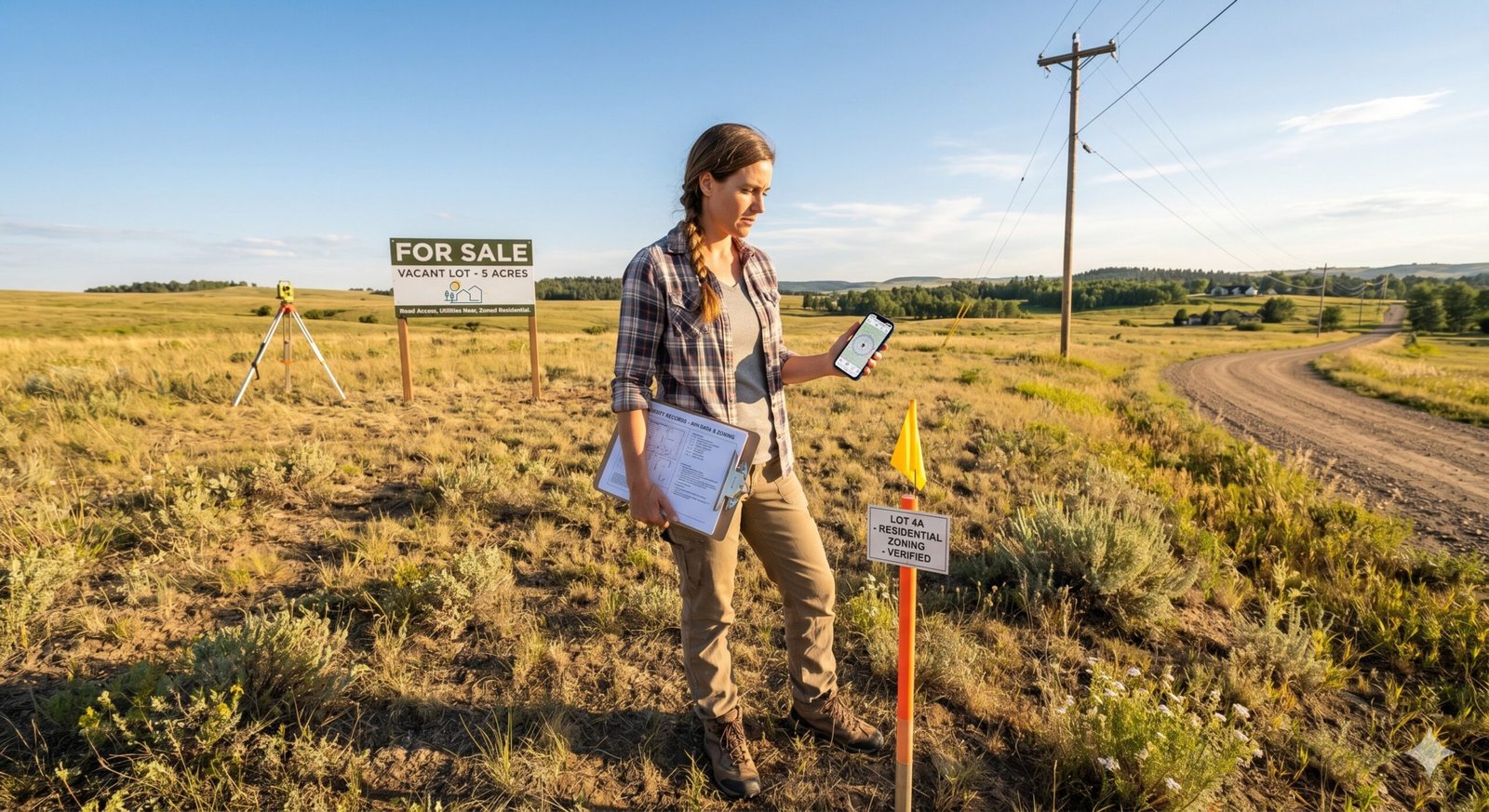
Buying a vacant lot is not complicated, but it does require a bit of homework. A few basic checks done before you commit can save you from buying something that does not match what you had in mind. Here are five things worth confirming on any parcel before you send money.
1. Zoning
Zoning tells you what you are legally allowed to do with a piece of land. A lot zoned residential allows homes, and sometimes mobile homes and accessory structures. Agricultural zoning might allow farming but restrict residential development. Some rural land has no formal zoning at all, which can mean more freedom but also less predictability.
Before you buy, find out the zoning designation and what it permits. The county planning or zoning office can confirm this. Look specifically for any restrictions on mobile homes, RVs, tiny homes, or camping, depending on what you plan to do with the land.
2. Road Access
There are two things to check here. First, does a road physically reach the property? Second, do you have a legal right to use that road?
A property can sit next to a road without having legal access to it. This is called a landlocked parcel, and it is more common than people expect. Before buying, confirm that the parcel has legal access, either via a public road or a deeded easement. County assessor records and plat maps can help with this.
3. Utilities
Find out what is available at or near the property. Water, electric, and sewer are the big three. On rural land, it is common for water to require a well and sewer to require a septic system. Electric is often available at the road even on remote parcels.
Ask the seller directly and then verify with the county or the local utility provider. "Available at the road" means the infrastructure exists nearby but you will need to run a line or drill a well. Know what you are getting into.
4. GPS Coordinates and Physical Visit
Every property listing should include GPS coordinates. Plug them into Google Maps or a navigation app and take a look at the satellite view. This tells you immediately whether the land is flat or sloped, wooded or open, near water or surrounded by other parcels.
If you can visit in person, do it. Rural land is accessible and you do not need an appointment. Walk the parcel if you can. Look at the road condition, the terrain, and the surrounding area. A physical visit removes any ambiguity about what you are buying.
5. County Records
Look up the parcel in the county assessor records using the APN (Assessor Parcel Number) from the listing. This confirms the size, the owner of record, whether property taxes are current, and sometimes additional details about zoning or land use. Most county assessors have this information available online at no cost.
If the taxes are delinquent, find out who is responsible for bringing them current before the sale closes. A legitimate seller will address this clearly in the purchase agreement.
None of these checks require a lawyer or a real estate agent. They require about 30 minutes and an internet connection. Done properly, they give you a clear picture of exactly what you are buying.